


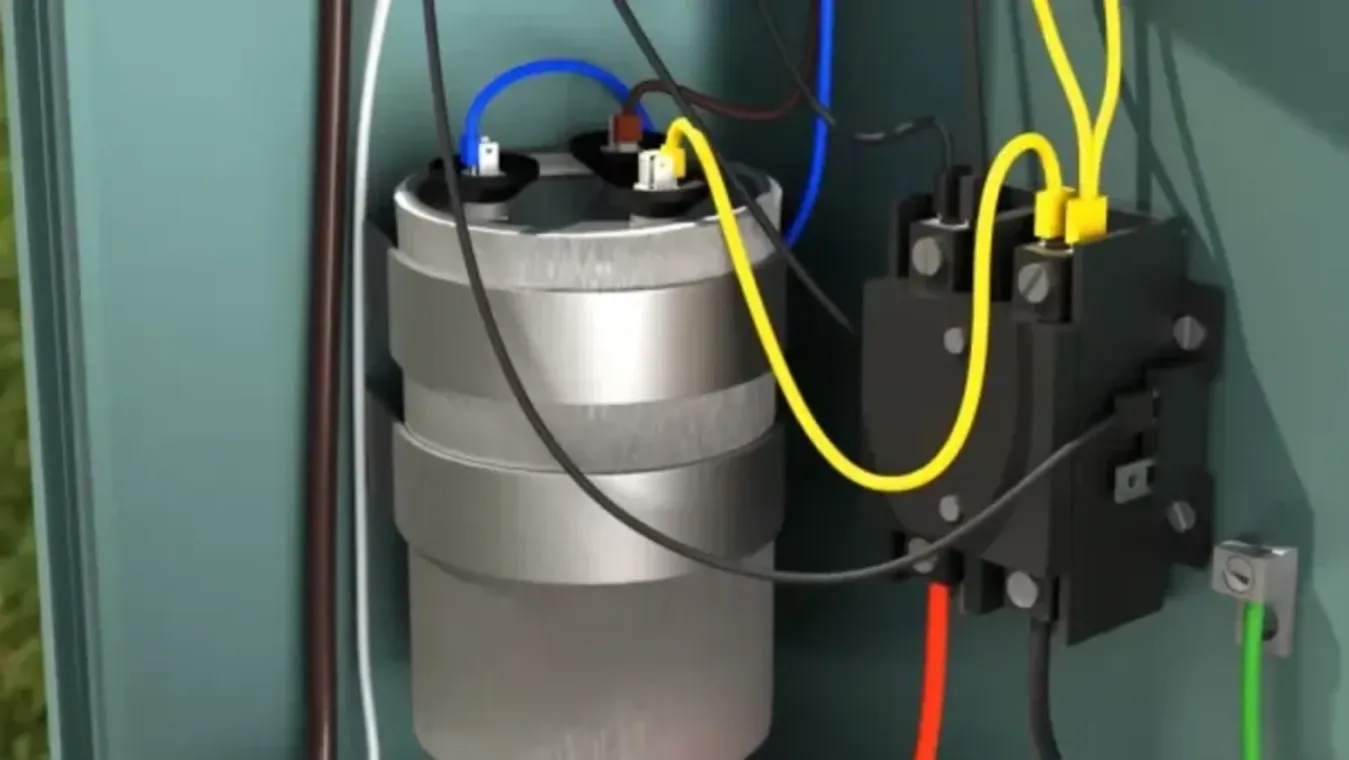
Of all the parts that fail in an air conditioner, the capacitor is the one we replace most often. It is small, it is cheap, and when it dies, your entire AC stops working. South Bay summers eat capacitors for breakfast. Here is what you need to know about the part that controls whether your house is comfortable on the next 95-degree day.

What a Capacitor Actually Does in Your AC
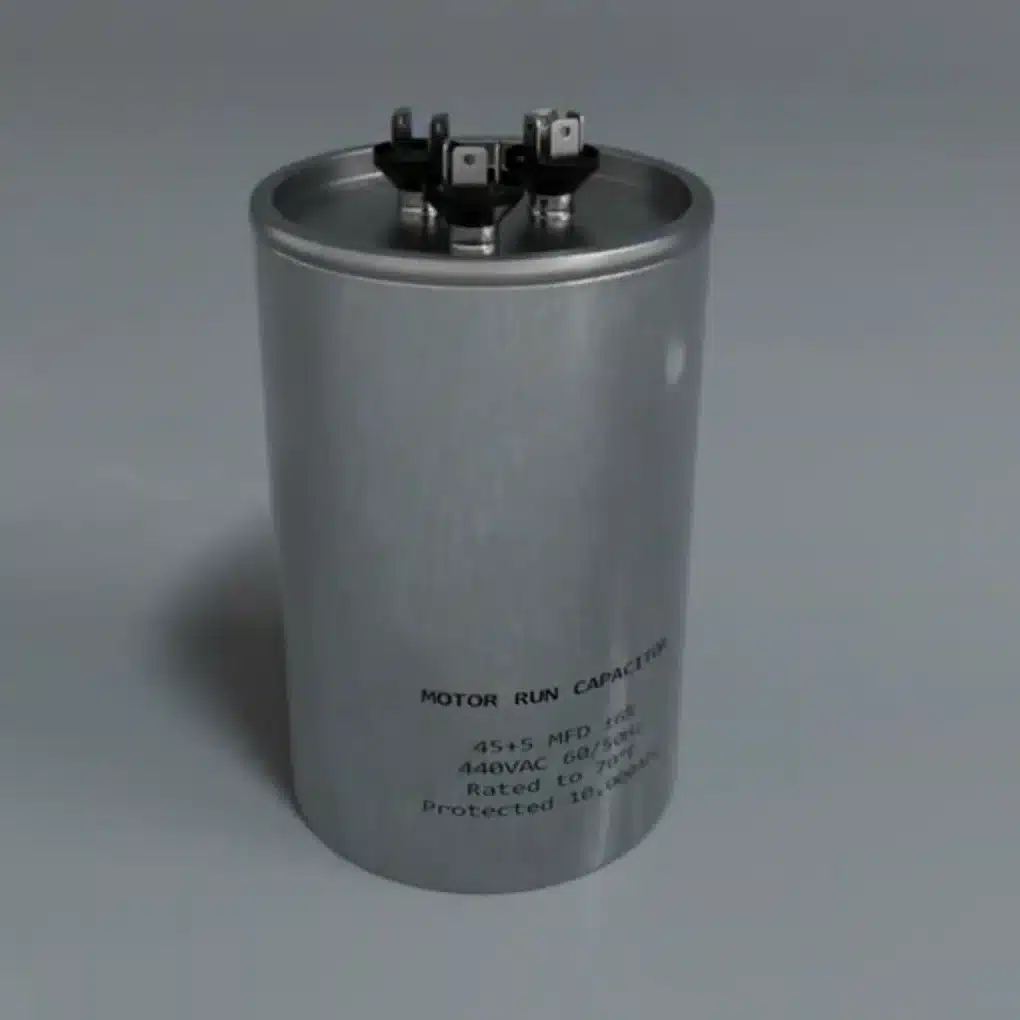
An HVAC capacitor is a small cylinder or oval-shaped component sitting inside your outdoor condenser unit. Its job is to store and release electrical energy at exactly the right moment to start and run two critical motors: the compressor and the condenser fan motor. Think of it as the kick starter and the steady hand for both motors. Without it, those motors either will not start at all, or they start and immediately overheat trying to draw power they cannot get smoothly.
Inside the capacitor are two metal plates separated by an insulating material called a dielectric. When voltage is applied, the plates store an electrical charge. When the motor needs that burst of energy to start spinning, the capacitor releases it. After startup, the run capacitor portion keeps providing a steady phase shift to keep the motor turning efficiently. That is the entire job. It sounds simple, and it is, until it stops working.
Signs Your AC Capacitor Is Failing
The system clicks but will not start
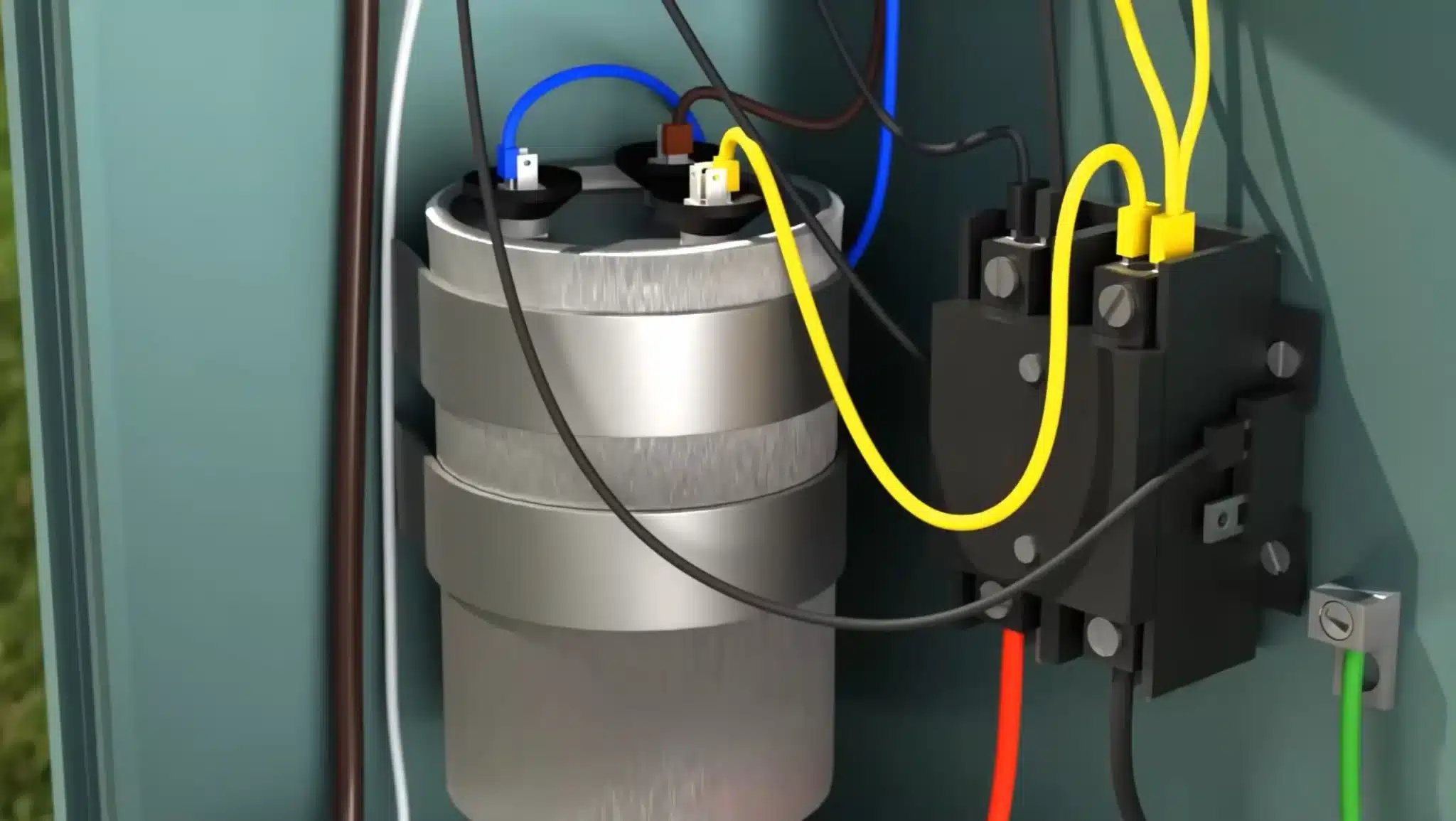
You hear the thermostat call for cooling. The outdoor unit makes a clicking sound. Maybe the fan tries to turn for a second. Then nothing. The compressor never engages and the fan never spins up to speed. That click is the contactor relay closing as it should, but the capacitor cannot deliver the surge needed to start the motors. Classic dead capacitor symptom.
The fan spins but the compressor never kicks on
This usually means a dual-run capacitor where only one side has failed. The fan side is still good, the compressor side is toast. The fan spins, your house never cools, and your electric bill creeps up because the system is running without producing any cooling.
Humming sound from the outdoor unit
A weak capacitor that has not quite died yet will let the motors try to start but they cannot quite get over the hump. You get a loud hum, sometimes a buzz, and then the system trips out on its internal overload protection.
Visible swelling or oil leakage
A healthy capacitor has flat ends. A failing one bulges out at the top like a soda can left in a hot car. Sometimes you will see oily residue on or below the unit. Both are unmistakable signs the capacitor is done. Do not try to test or run a swollen capacitor, replace it.
Start Capacitors, Run Capacitors, and Dual Capacitors
There are three capacitor types in an HVAC system and they do different jobs. A start capacitor delivers a high burst of energy to overcome the inertia of a stopped motor. It only engages for a fraction of a second at startup, then drops out of the circuit. A run capacitor stays in the circuit the entire time the motor is running. It provides a continuous phase shift that keeps the motor turning smoothly and efficiently.
A dual-run capacitor combines two run capacitors in one housing, one side for the compressor and one side for the condenser fan. You will see three terminals: C for common, HERM for compressor, and FAN for the fan motor. Most modern residential condensers use a single dual-run capacitor instead of two separate ones.
Microfarad ratings matter. A capacitor rated 45/5 means 45 microfarads on the HERM side and 5 microfarads on the FAN side. Replacing with the wrong rating, even by a few microfarads, can shorten compressor life or trigger early failure of the new capacitor. Always match the rating on the failing unit, or check the equipment nameplate.
Why South Bay Heat Kills Capacitors So Fast

Capacitors live inside the outdoor condenser unit. That cabinet sits in direct sun all summer in San Jose. Cabinet internal temperatures regularly hit 140 to 160 degrees Fahrenheit on a 95-degree afternoon. Capacitors are rated to operate at 65 to 85 degrees ambient. Every degree above that rating cuts the expected lifespan roughly in half.
A capacitor rated for 60,000 hours of service in a climate-controlled lab might last 5 to 8 years in a shaded South Bay install. In a unit that bakes against a south-facing wall in Almaden or Cambrian, that same capacitor might die in 2 to 4 years. The fix is not running out and buying a more expensive capacitor. The fix is shading the outdoor unit, keeping it clean, and replacing the capacitor proactively before it kills your compressor.
That last part matters. When a capacitor fails and you keep running the system, the compressor tries to start without the proper electrical assist. It draws massive locked rotor amperage, trips on internal overload, cools, tries again, trips again. Each cycle stresses the compressor windings. Enough cycles and you go from a 30 dollar capacitor replacement to a 4,000 dollar compressor replacement. We see it every summer. Related reading: Condenser Fan Motors and HVAC Contactors.
Should You Replace an HVAC Capacitor Yourself?

Capacitor replacement looks easy on YouTube. Two wires, three terminals, drop in the new one. The reality is that a charged capacitor stores 400 to 600 volts of DC potential even after the power is off. If you touch both terminals at once, that charge will dump through you in milliseconds. Capacitor shock has killed people. It has put more in the hospital with cardiac arrhythmias they did not have before.
If you are going to do it anyway, kill power at the disconnect AND the main breaker, wait 5 minutes, then use an insulated screwdriver with a rubber handle to short the terminals across each other before you touch anything. Verify with a voltmeter that the capacitor is fully discharged. Use only OEM-matched microfarad and voltage ratings. Tighten the terminals snug but not over-torqued. Cycle the system and verify proper compressor amperage at the disconnect.
Or pay a pro 200 to 350 dollars and have it done in 20 minutes with proper testing, the right capacitor, and a warranty on the work. The math is up to you. We are not in business to make this complicated, we are in business because most homeowners would rather not bet their compressor or their heart on whether they remembered to discharge the cap.
Frequently Asked Questions
How long should an HVAC capacitor last?
Manufacturer rating is typically 60,000 to 80,000 hours, which would be 15 to 20 years in a perfect environment. Real-world South Bay residential life is closer to 5 to 8 years for a shaded unit and 2 to 4 years for a unit that sits in direct afternoon sun.
How much does AC capacitor replacement cost in San Jose?
The part itself runs 15 to 40 dollars for a standard dual-run capacitor. Total job with diagnostic, replacement, system test, and warranty typically lands between 200 and 350 dollars in the South Bay.
Can a bad capacitor damage my AC compressor?
Yes. A failing capacitor forces the compressor to start under abnormal electrical conditions, drawing locked rotor amperage that stresses the windings. Repeated start attempts on a weak capacitor are one of the leading causes of premature compressor failure. Replace the capacitor as soon as symptoms appear.
How do I know what microfarad rating capacitor I need?
The rating is printed on the side of the existing capacitor in the format 45/5 uF or similar. It is also listed on the equipment nameplate inside the condenser access panel. Use the exact rating, plus or minus 6 percent is typically the acceptable tolerance.
Why does my AC capacitor keep failing every couple of years?
Repeated capacitor failure points to an environmental or electrical problem, not bad capacitors. Common causes: outdoor unit installed in full afternoon sun with no shading, undersized capacitor for the actual compressor draw, voltage problems in the supply line, or a compressor with high amp draw stressing the capacitor beyond its rating.
AC Acting Up? Get It Looked At Before August
Silicon Valley Comfort diagnoses and replaces AC capacitors across Santa Clara and San Mateo counties. If your system is clicking, humming, or struggling to start, call 408-691-5940 or email service@air.systems. A 30-minute visit now beats a dead compressor in 95-degree heat.
Something acting up? Let us diagnose it right.