


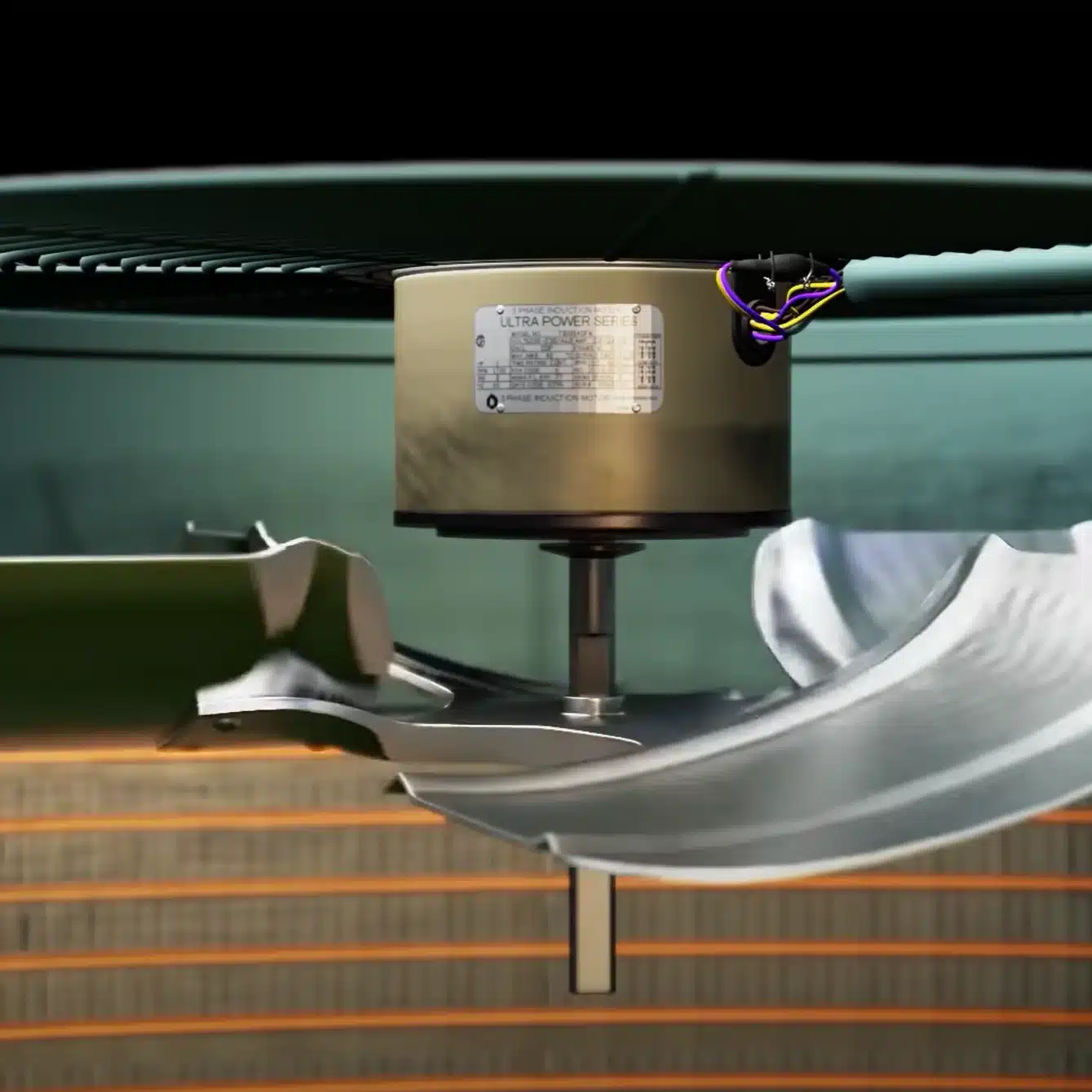
The condenser fan motor lives inside your outdoor AC unit and has one job: pull outdoor air across the condenser coil so the system can dump heat outside. When it works, you barely notice it. When it fails, the system either trips off on high pressure within ten minutes or runs and runs without cooling. In a South Bay summer, that is the difference between a comfortable house and a small claims court visit with your tenant.

What the Condenser Fan Motor Actually Does

An air conditioner moves heat from inside your house to outside. The compressor squeezes refrigerant into a hot high-pressure vapor and sends it to the condenser coil sitting in your outdoor unit. The condenser fan motor pulls outdoor air across that coil, dumping the heat into the atmosphere. The refrigerant cools and turns back into a liquid, ready to absorb more heat indoors.
If the fan stops moving air, the coil cannot dump heat. Refrigerant pressure climbs fast. Within minutes, the high-pressure safety switch trips and the compressor shuts off. Lucky case, your system just sits there refusing to start until the pressure equalizes. Unlucky case, the safety switch fails to trip and the compressor cooks itself trying to push refrigerant against impossible head pressure.
So this little motor, usually 1/4 to 1 horsepower, sitting on top of your outdoor unit, decides whether your compressor survives the day. That is why we always check it on a service call before we touch anything else.
PSC vs ECM Condenser Fan Motors
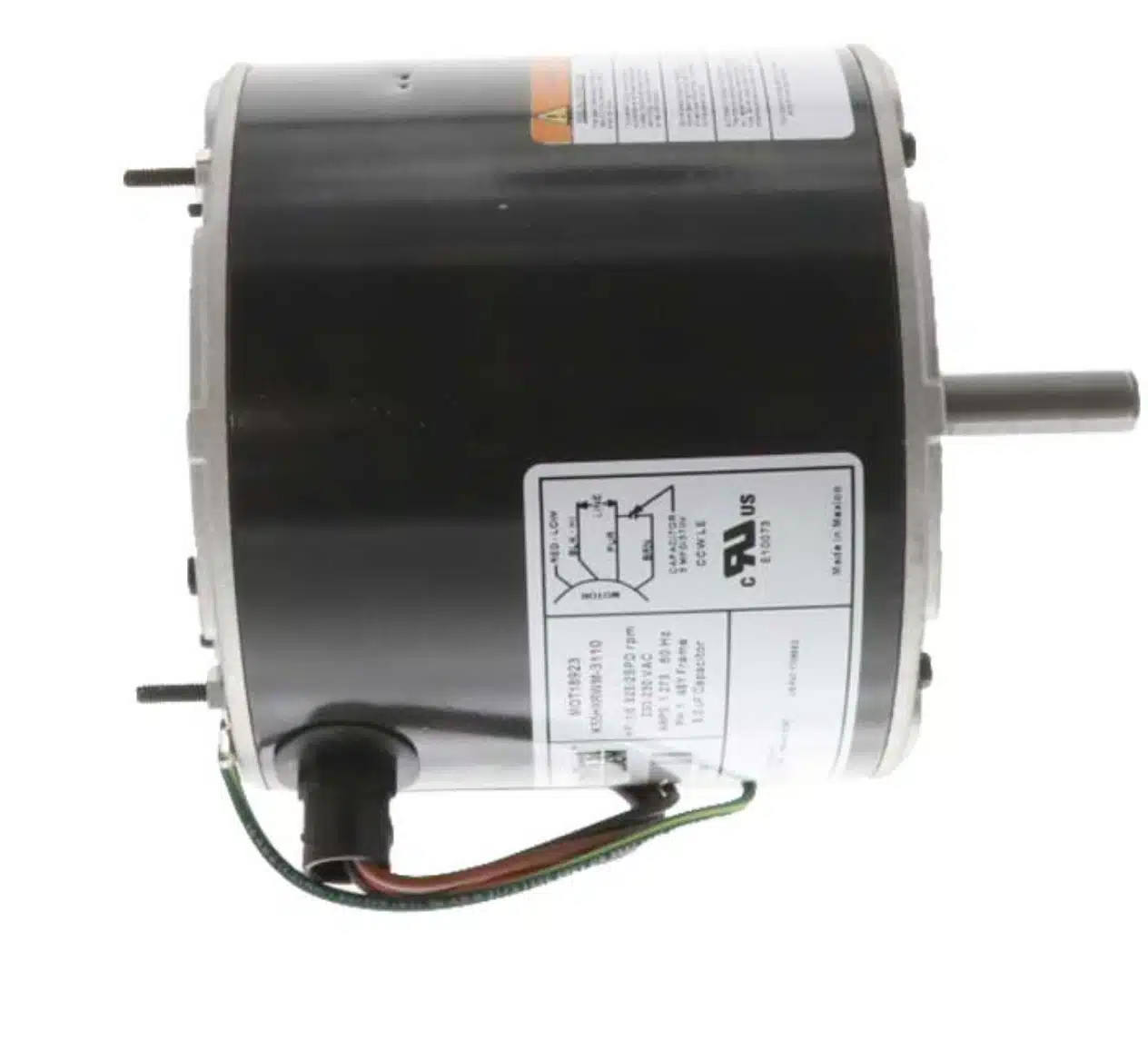
There are two main types of condenser fan motors out there, and the difference matters when you go to replace one.
PSC, Permanent Split Capacitor
This is the traditional fan motor in most single-stage and two-stage residential systems built before about 2018. Single fixed speed. Relies on a dedicated capacitor to provide the phase shift needed for starting and running. Cheaper, simpler, easier to replace. Typical lifespan 8 to 12 years in South Bay conditions. When the capacitor that drives it fails, the motor often dies a few months later from running under stressed electrical conditions.
ECM, Electronically Commutated Motor
The variable-speed motor used in modern high-efficiency and inverter-driven systems. Has its own integrated electronics that read the control board signal and ramp the motor up and down. No external capacitor needed. Quieter, more efficient, lasts 12 to 18 years on average. The catch: ECM motors are expensive to replace, often three to five times the cost of an equivalent PSC motor, and they cannot be swapped for a PSC even if you wanted to. The control board needs the ECM signal protocol.
If you are not sure which type your system has, look at the wiring. PSC motors have three or four wires going into the motor and a separate capacitor mounted nearby. ECM motors have a multi-pin plug going into them and no external capacitor for that motor.
Signs Your Condenser Fan Motor Is Failing
Outdoor unit humming but the fan is not spinning
You walk outside, the compressor is running, you can hear it. The fan blades sit dead still. This usually means a seized motor or a dead capacitor on a PSC system. Give the blade a gentle nudge with a long stick from a safe distance. If the fan immediately spins up and starts running, the capacitor is the suspect. If the motor still does not run with the assist, the motor itself is shot.
Fan spinning but slow or wobbly
A failing motor often spins below rated RPM. Maybe a worn bearing dragging on the shaft. Maybe internal winding damage starving the motor of torque. The fan still appears to run but it cannot move enough CFM across the coil. Symptoms include slow cooling, high head pressure, and an outdoor unit that gets uncomfortably hot to the touch on the cabinet.
Loud grinding or screeching noises
The bearings inside a condenser fan motor are the part most exposed to weather. They eventually dry out, water gets in, or debris contaminates them. When they fail, the motor sounds like a coffee grinder. Grinding usually buys you a few weeks before total failure. Screeching is more urgent, the motor is fighting to keep spinning and is about to seize.
Burning smell from the outdoor unit
An overheating motor smells exactly like you think it does. Burning rubber or hot wire insulation. If you smell it, kill the power at the disconnect immediately. Running a smoking motor adds compressor damage and electrical hazard to the bill. Once it cools and you have shut it down, a technician can diagnose whether the motor is salvageable.
High amp draw under no extra load
A healthy condenser fan motor draws within 5 to 10 percent of the FLA (Full Load Amperage) listed on the nameplate. A motor pulling significantly more amps than rated is usually fighting failing windings or worn bearings. This is one of the diagnostics we run with a clamp meter on every service call before condemning anything else.
Why Condenser Fan Motors Fail So Often in San Jose

The South Bay puts condenser fan motors through more abuse than they were designed for. Three main reasons.
One. Heat. The motor is mounted directly on top of the unit, sitting in the hottest air on the property. On a 100-degree day, the air the motor breathes can be 115 to 130 degrees by the time it has been recirculating through the coil and back over the motor. Bearings, windings, and lubricants all degrade faster at high temperatures.
Two. A dying capacitor that nobody replaced. On PSC motors, a weakening capacitor forces the motor to start under abnormal electrical conditions. Each start cycle stresses the windings. Over a few months, the motor dies of cumulative damage. This is why a capacitor replacement on a humming system is cheap insurance for the motor as well.
Three. Dirty coil restricting airflow. When the condenser coil gets clogged with cottonwood fluff, dust, dog hair, or whatever else, the motor has to work harder to pull the same amount of air. Higher amp draw, higher heat, faster failure. Annual coil cleaning during the spring tune-up extends fan motor life dramatically.
Diagnosing the Failure

The diagnostic is fast if you do it in order. First, kill power at the disconnect, then visually inspect. Are the blades free to turn by hand? If not, the motor is seized, replace it. If yes, restore power and observe startup.
If the motor hums but does not start, clamp the capacitor terminals with a capacitance meter and verify the capacitor microfarad rating is in spec (typically plus or minus 6 percent of the printed value). Bad capacitor, replace it and the motor often comes back to life. Capacitor checks out, the motor is the failure.
If the motor runs but acts weak, clamp the motor common wire with a clamp meter while the unit runs. Compare actual amp draw to nameplate FLA. Running above FLA means the motor is failing under load. Running well below FLA usually means low voltage at the disconnect, which is a separate problem upstream.
For ECM motors, the diagnostic is different. You need a multimeter that can read DC voltage on the control wires and confirm the board is sending the right signal. If the signal is good and the motor is not responding, the integrated electronics inside the motor have failed and the whole motor needs replacement.
Should You Replace a Condenser Fan Motor Yourself?

For a PSC motor on a single-stage system, this is one of the more DIY-friendly HVAC repairs IF you respect the electrical hazards. Disconnect power at the breaker AND the disconnect outside, wait five minutes, then discharge the capacitor by shorting its terminals across each other with an insulated screwdriver before you touch anything. Verify zero voltage with a multimeter. Take a photo of the wiring before you remove anything. Match the new motor to the old one on horsepower, RPM, rotation direction, shaft diameter, and capacitor microfarad rating. Reinstall the blade at the same height on the shaft.
Pro estimate for a PSC motor replacement runs 350 to 650 dollars depending on the motor and the unit. ECM motor replacement is a different animal, 700 to 1,500 dollars including the motor and the labor to verify the control board can talk to it. For ECM systems, just call a pro. The cost of getting it wrong is higher than the labor savings.
Frequently Asked Questions About Condenser Fan Motors
How long should a condenser fan motor last?
PSC motors typically last 8 to 12 years in South Bay conditions. ECM motors last 12 to 18 years. Heat exposure, capacitor health, and how often the coil gets cleaned all swing this number by years in either direction.
How much does a condenser fan motor cost installed in San Jose?
PSC motor replacement runs 350 to 650 dollars total including the motor, capacitor inspection, and labor. ECM motor replacement runs 700 to 1,500 dollars depending on whether the integrated electronics are part of the motor or a separate module. After-hours service costs more.
Can I keep using my AC if the fan motor sounds bad?
No. A grinding or screeching motor is days, sometimes hours, from total failure. When it fails, head pressure spikes and the compressor takes the hit. Compressor replacement is ten times the cost of a fan motor. Shut the system off and schedule a diagnostic before you turn it back on.
Will replacing the capacitor fix a dead fan motor?
Sometimes. If the motor itself is good but the capacitor has died, a new capacitor brings the motor back to life. If the motor has burned internal windings or seized bearings, no capacitor will fix it. The diagnostic determines which is the case. Replacing a capacitor on a damaged motor just buys you a week before the motor dies again.
Do mini splits have condenser fan motors?
Yes. The outdoor unit of a mini split has its own condenser fan motor, almost always an ECM. They tend to last longer than central AC fan motors because mini split outdoor units run at variable speed and rarely hit full load. Same diagnostic approach when they fail, but parts are brand-specific and more expensive.
Fan Acting Up? Schedule a Diagnostic Before It Costs You a Compressor
Silicon Valley Comfort diagnoses and replaces condenser fan motors across Santa Clara and San Mateo counties. Call 408-691-5940 or email service@air.systems. We measure first, then quote. No condemning parts that are still good.
Related HVAC Services
- AC repair in San Jose
- emergency HVAC repair
- refrigeration circuit components
- HVAC service areas across the South Bay
Need this handled instead of DIY? Silicon Valley Comfort runs same-day calls across the South Bay. Call 408-691-5940 or book a visit with Silicon Valley Comfort.